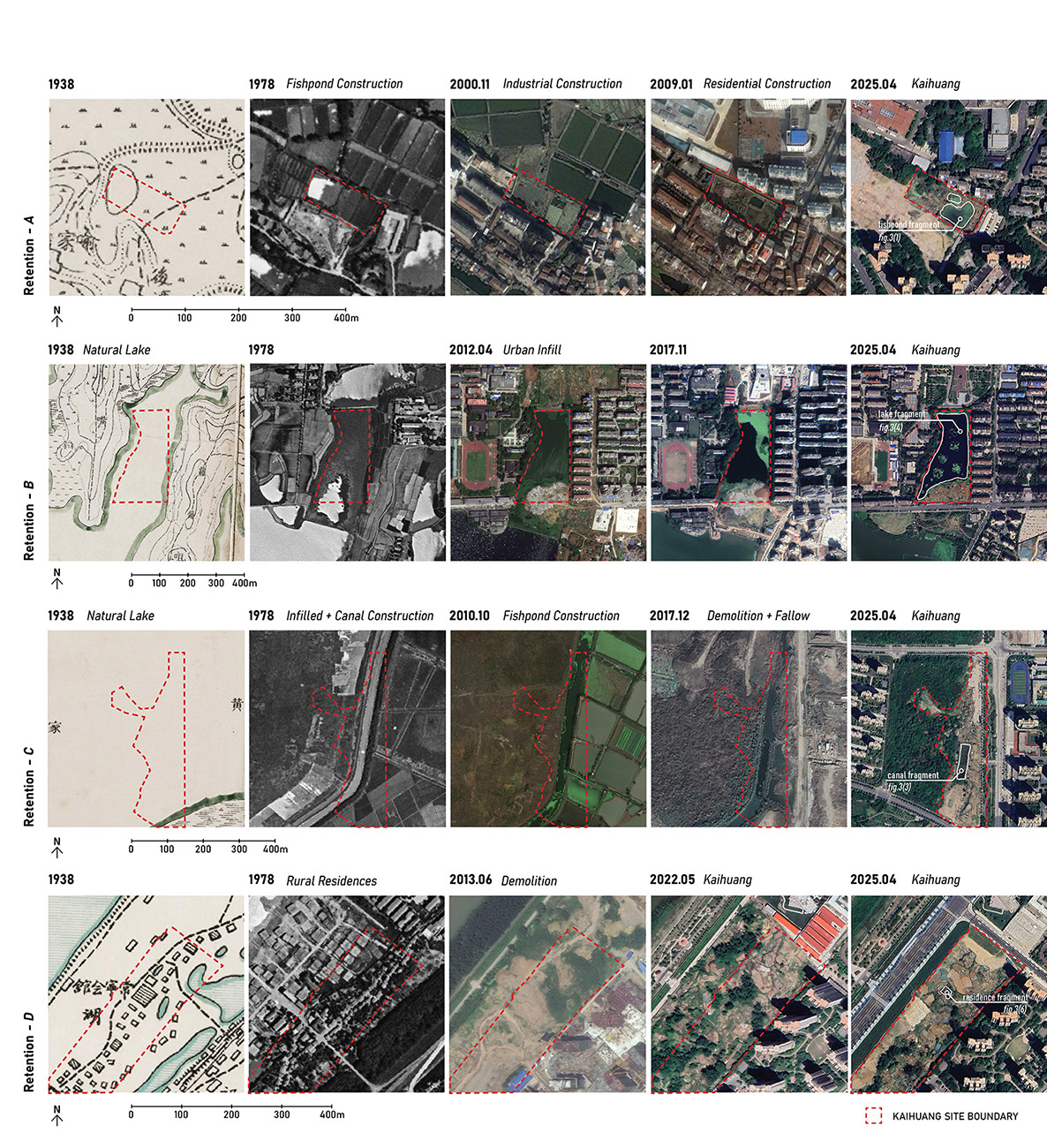
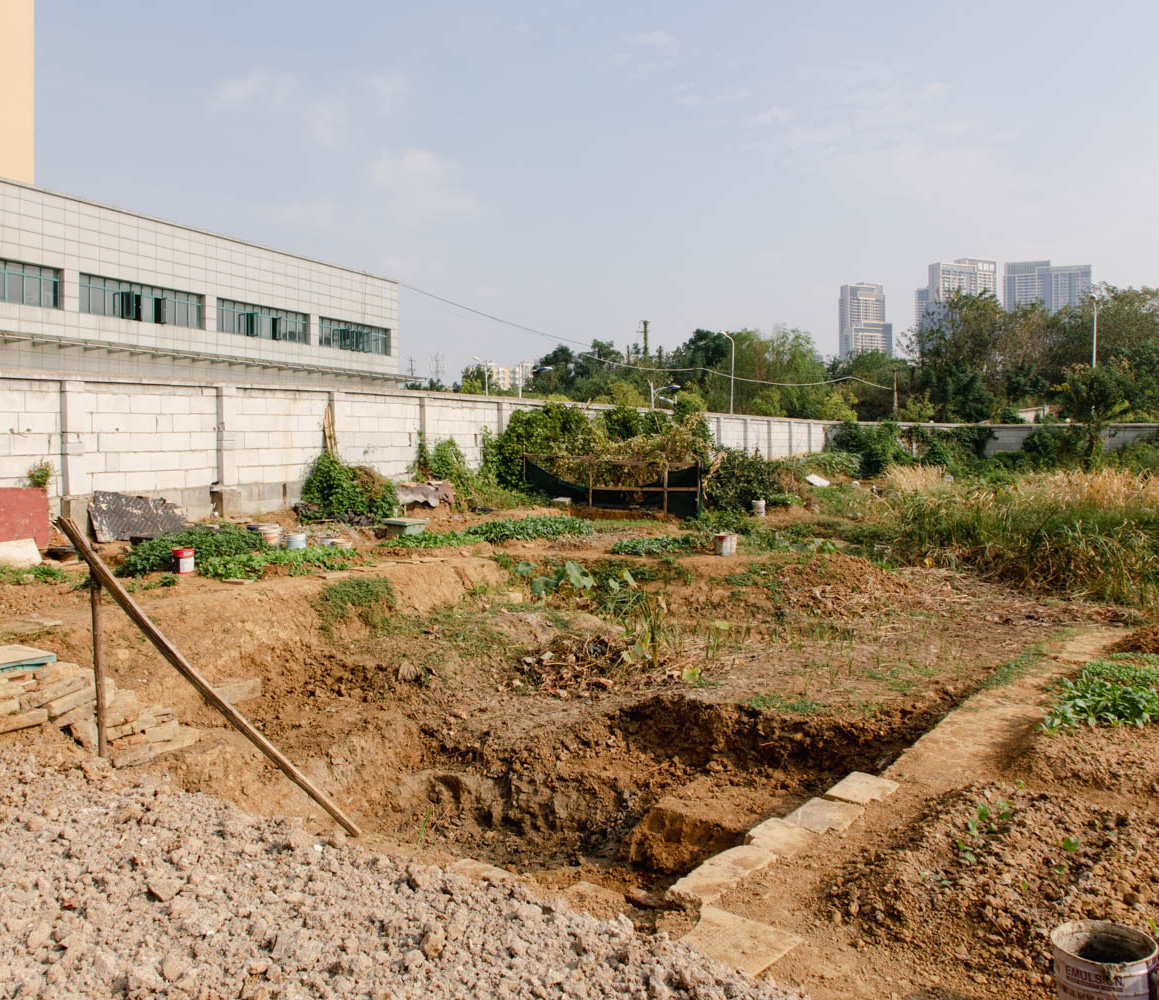
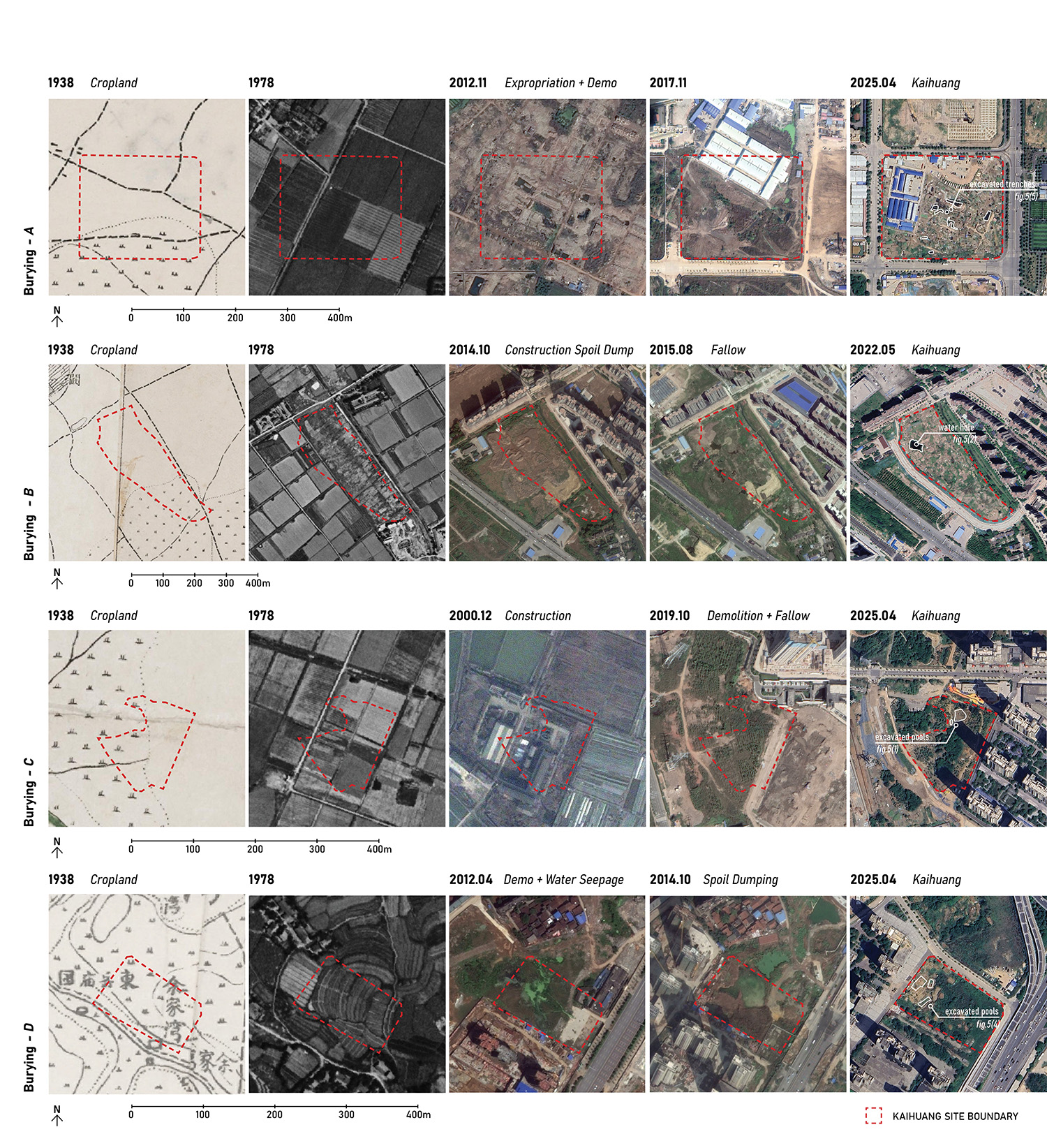
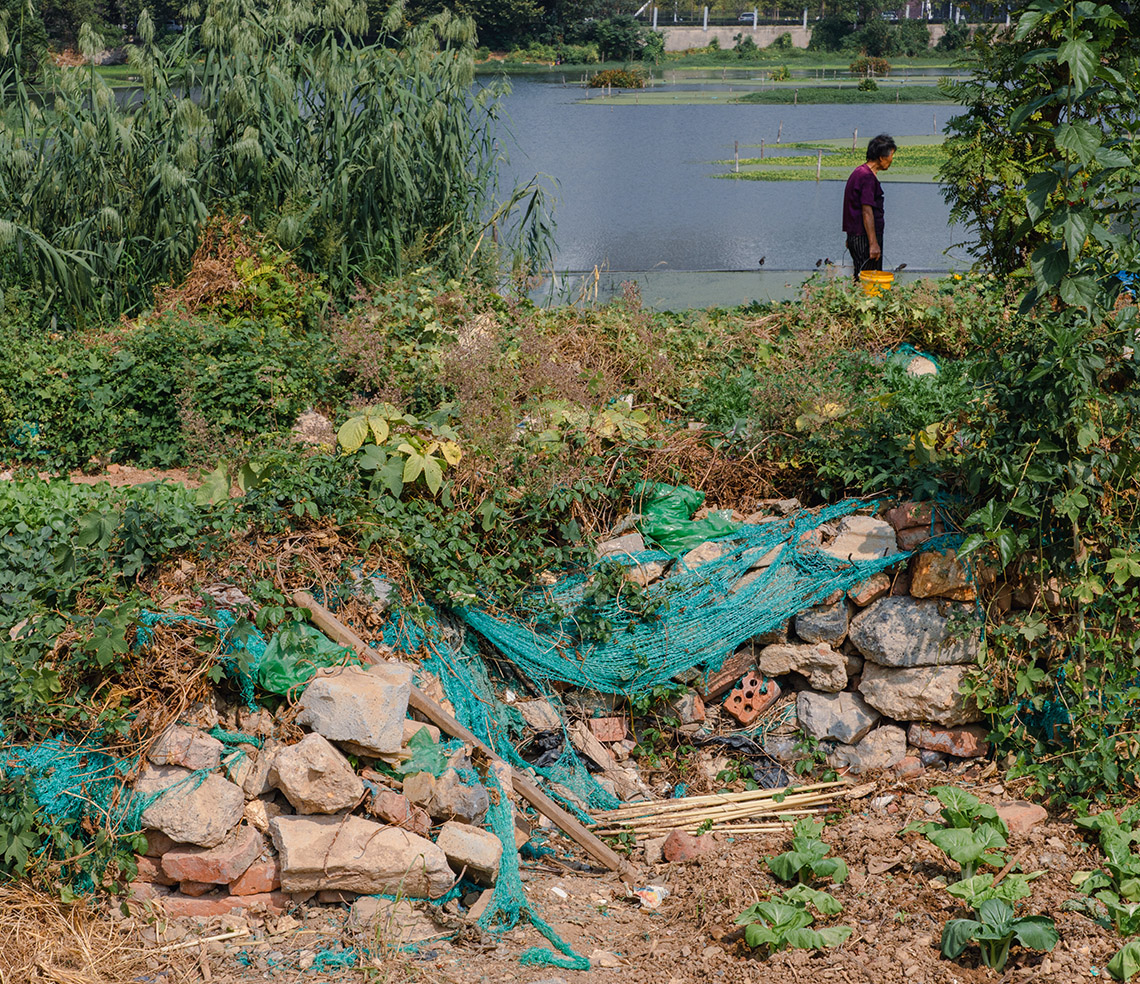
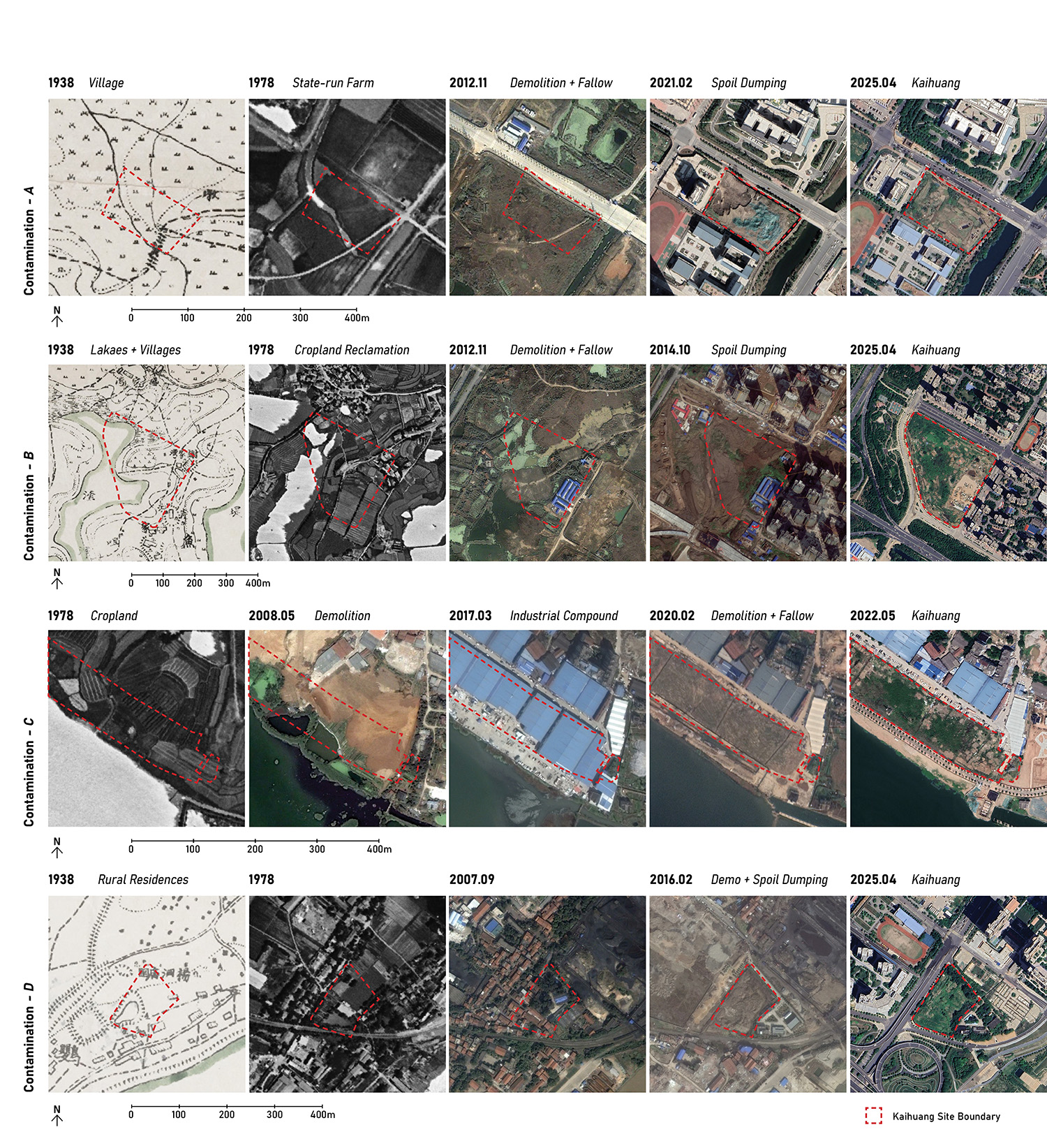
The modern enclosure and expropriation of rural land have produced urban landscapes in which the antecedent agrarian and natural landscapes are almost completely illegible. Yet, even as the world appears increasingly urbanized, rural entities and processes do not simply disappear. Examining agrarian-urban landscapes created in the core urban districts of the Chinese megacity Wuhan by a practice called kāihuāng (Mandarin, “opening wasteland”) – where ordinary residents without organization or permission appropriate urban ‘wastelands’ for vegetable cultivation – this article argues that urbanization’s erasure of rural and natural landscapes is never complete. Leveraging Karan Barad’s notion of temporal diffraction and feminist theorizations of intra-action and entanglements, this paper draws on in-depth interviews, field observations, time-series geospatial analysis and historical materials to present an account of urbanization, not as a linear supersession of rurality by urbanity, but a diffractive superposition of rural and urban temporalities that co-exist within the contemporary urban landscape. In doing so, it identifies three patterns of Wuhan’s rural-urban diffraction and the diffractive practices that kāihuāng cultivators carry out in response: the Retention/Anchoring of rural fragments, the Burial/Excavation of landscape dynamics, and the Contamination/Adaptation of overlapping soil layers.